Dinner Party Hosting 101: Everything You Need to Know
Dinner party hosting has a way of starting with excitement and then taking a u-turn into anxiety. You send the invitations in a rush of enthusiasm, and then the questions start: What are you going to cook? When does everything need to happen? How are you supposed to look relaxed when the doorbell rings at 6pm? The good news is that a great dinner party is almost entirely a planning problem, not a cooking one. Get the decisions made early, build a sensible timeline, and the evening runs itself.
This covers the full arc of hosting a dinner party, from the moment you decide to invite people to the moment you clear the last plate. Each section gives you a specific, actionable piece of the system. If you'd rather skip the build-it-yourself approach, The Dinner Party Guide offers a collection of downloadable hosting guides that deliver a complete menu, shopping list, and timed prep plan in a single instant download. But if you want to understand how it all fits together, start here.
How to start: guest list, invitations, and gathering key info
The decisions you make before a single grocery item lands in your cart will shape every choice that follows. A clear guest list, a well-timed invitation, and one simple question asked upfront will protect your menu and your sanity.
Choosing your guest count (and why it matters)
Headcount affects everything: portion sizes, how much table space you have, and how stretched you'll feel on the night. For a first dinner party, many hosts find four to six guests a manageable starting point. It's an intimate number that allows for real conversation, scales well for most home kitchens, and keeps the logistics from becoming overwhelming.
Sending invitations with enough lead time
For a casual sit-down dinner, one to two weeks is typically enough notice. For a more formal occasion, etiquette guides generally recommend three to five weeks so guests can plan around it comfortably. A good invitation includes the date, start time, address, and an RSVP deadline. Including a rough end time is a small but thoughtful detail: it signals the tone of the evening and helps guests with childcare or early mornings. If you need help with phrasing, see these practical invitation wording ideas to make your message clear and welcoming.
Collecting dietary restrictions before you plan a single dish
This is the step most first-time hosts skip, and it's the one they most regret. Ask every guest about allergies, intolerances, and preferences before you finalise anything, and if anyone has a severe allergy, be mindful of cross-contamination during prep. Frame it as protecting the menu, not adding complexity to it. One short message saves you from assembling a beautiful dinner that one guest can't eat a single bite of.
Dinner party menu planning: choosing dishes that actually work together
Decision fatigue hits hardest at the menu-planning stage. You open three recipe tabs, close them all, and open three more. The antidote is a framework, not more scrolling.
Make-ahead menu frameworks for six guests
Each of these menus is built around a shared logic: components that can be prepared in advance so the day-of work is minimal.
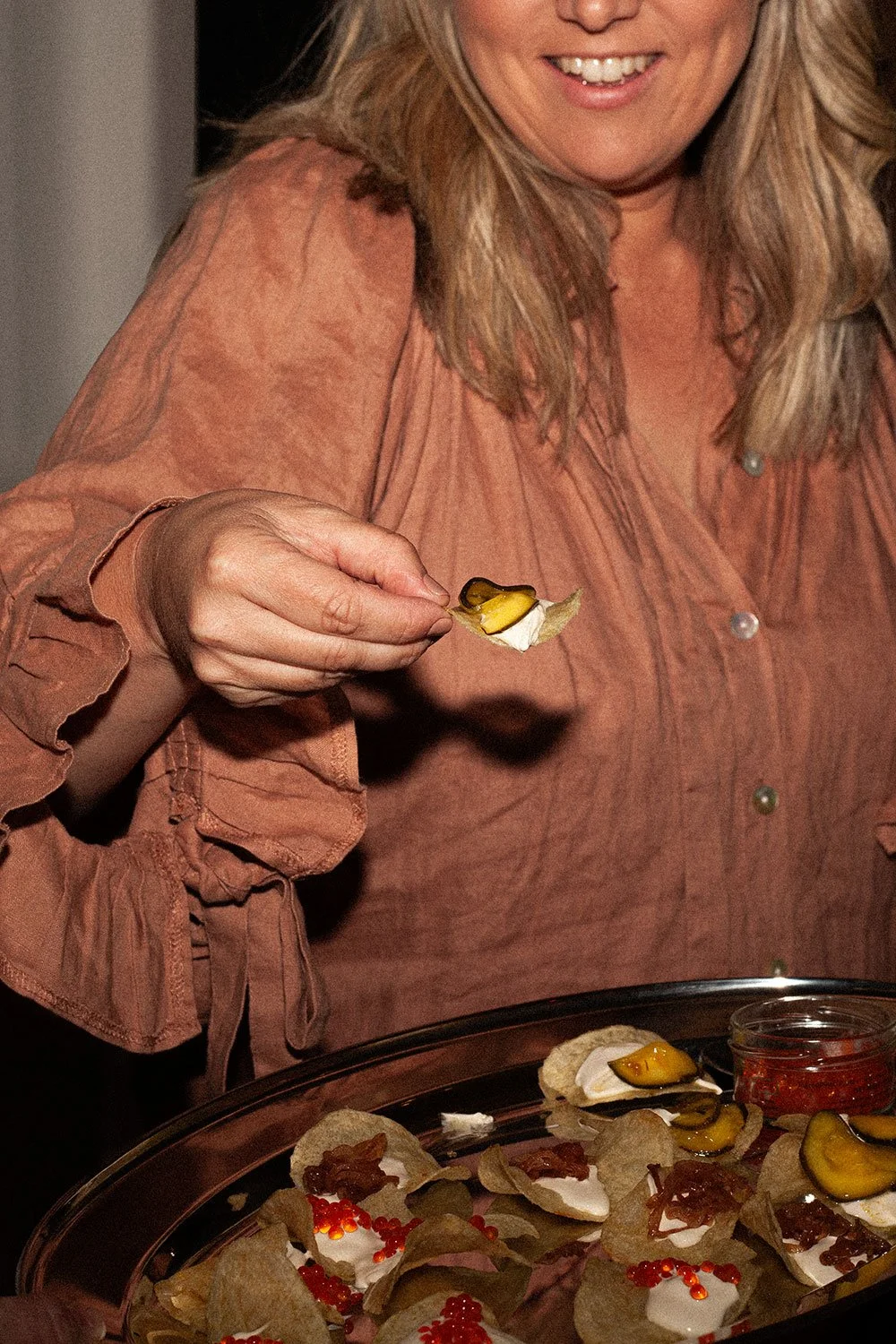
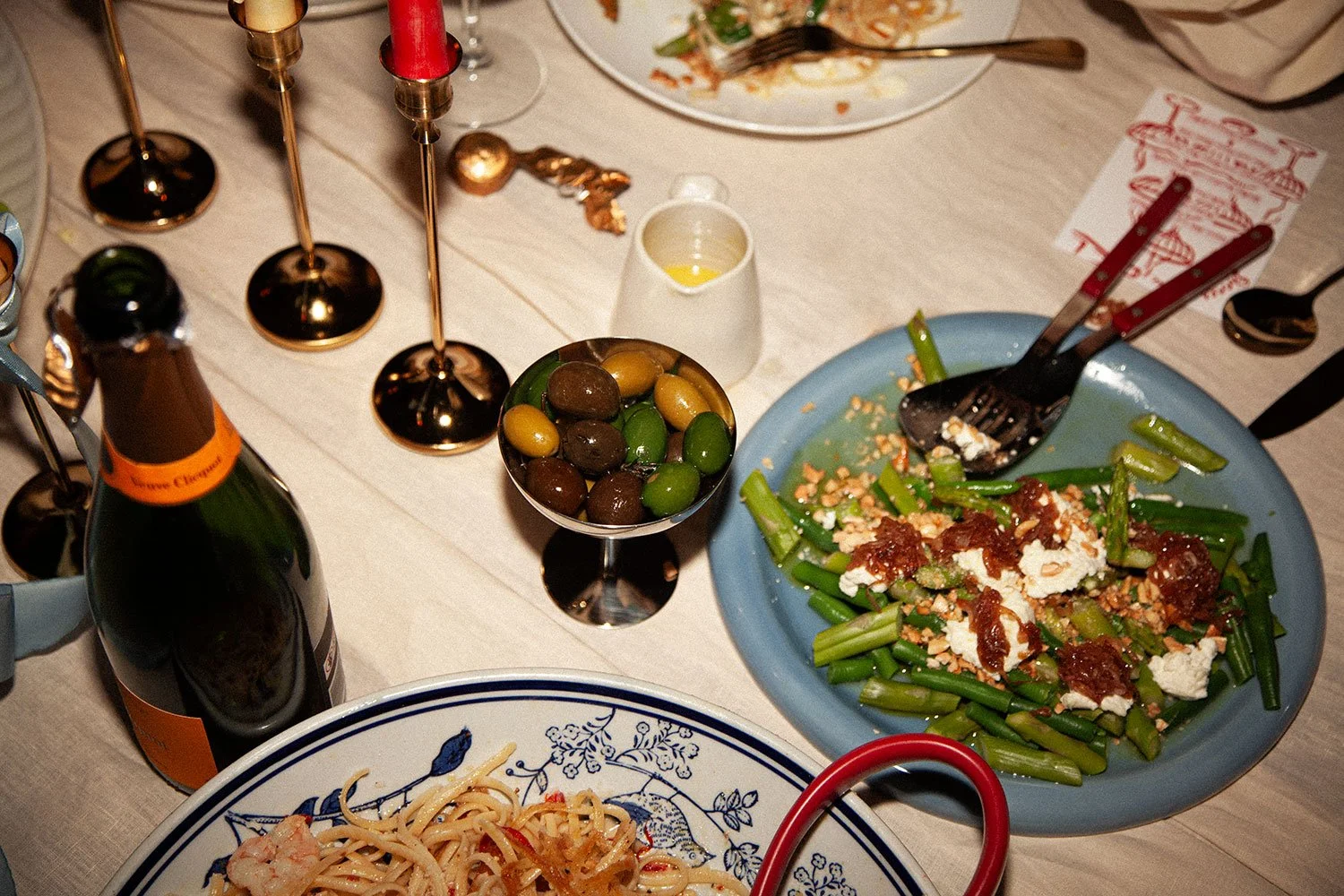
The first is a pescatarian menu from My Soirée, anchored by chilli prawn linguini, with Caesar bites and a chip flight to start, and passionfruit prosecco jellies to finish. The second is a vegetarian-leaning spread from A Middle Eastern Spread, where dishes like charred eggplant dip, smashed cacio e pepe potatoes and Persian love cake can largely be prepared ahead and assembled with ease. The third is a classic comfort menu from A Cozy Winter Feast, built around slow-cooked lamb shanks with red wine and rosemary, with simple starters like sourdough and whipped butter, and red wine poached pears to finish.
All three are designed for six, hold their quality when prepped ahead, and leave the kitchen mostly clear by the time guests arrive. That last point matters more than any individual recipe, a calm kitchen means a calm host.
What makes a dinner party menu work as a whole
A cohesive menu balances rich and light courses, distributes oven and stovetop time across the prep window, and avoids the trap of every dish needing a burner at once. Think about what can be finished at room temperature, what travels from fridge to table without reheating, and what genuinely improves when made the day before. A well-structured menu feels effortless because the effort was front-loaded.
The shortcut that handles this entire step for you
If building a menu from scratch still feels like too much, The Dinner Party Guide exists exactly for this moment. Each downloadable guide delivers a fully curated, occasion-specific menu complete with recipes, a shopping list, and a timed prep plan in one place. Think of it as a co-host who handled all the hard thinking before you even opened the fridge.
Dinner party hosting timeline: from six hours out
A timed prep plan is what separates a calm host from a frantic one. Without it, every task feels equally urgent. With it, the work unfolds in logical order and nothing is forgotten. If you prefer a ready-made checklist to follow, this ultimate dinner-party planning checklist is a useful reference to map tasks against a timeline.
Six to three hours before: the heavy lifting
This is when the bulk of cooking happens. Pull out all your ingredients, start any slow-cook components, prep salad garnishes, arrange your bar cart with glassware and bottles, and run the dishwasher so clean serveware is ready when you need it. If your menu has anything that benefits from marinating or resting, this window is when it starts.
Two hours to 30 minutes before: the finishing window
By the two-hour mark, the cooking should be nearly complete. Use this window to touch up the space: wipe counters, fluff cushions, clean the guest bathroom. Adjust the lighting, get yourself dressed, and open the wine closer to the 30-minute mark so it has time to breathe. This buffer is what protects your composure. Hosts who skip it are still in aprons when the first guest knocks.
The 10-minute reset before the doorbell rings
Light the candles, turn on your playlist at low volume, fill the water glasses, and set out the appetizers. Then step back and take a breath. The goal at this point is to already be in host mode, not still in cook mode. Guests read the room the moment they walk in, and a host who looks settled makes everyone feel welcome.

Setting the table and creating atmosphere guests actually feel
Guests won't remember every dish, but they will remember how they felt when they walked in. Many finishing touches come together in the last 30 minutes before arrival, and none of them require culinary skill.
A simple place setting guide that's never fussy
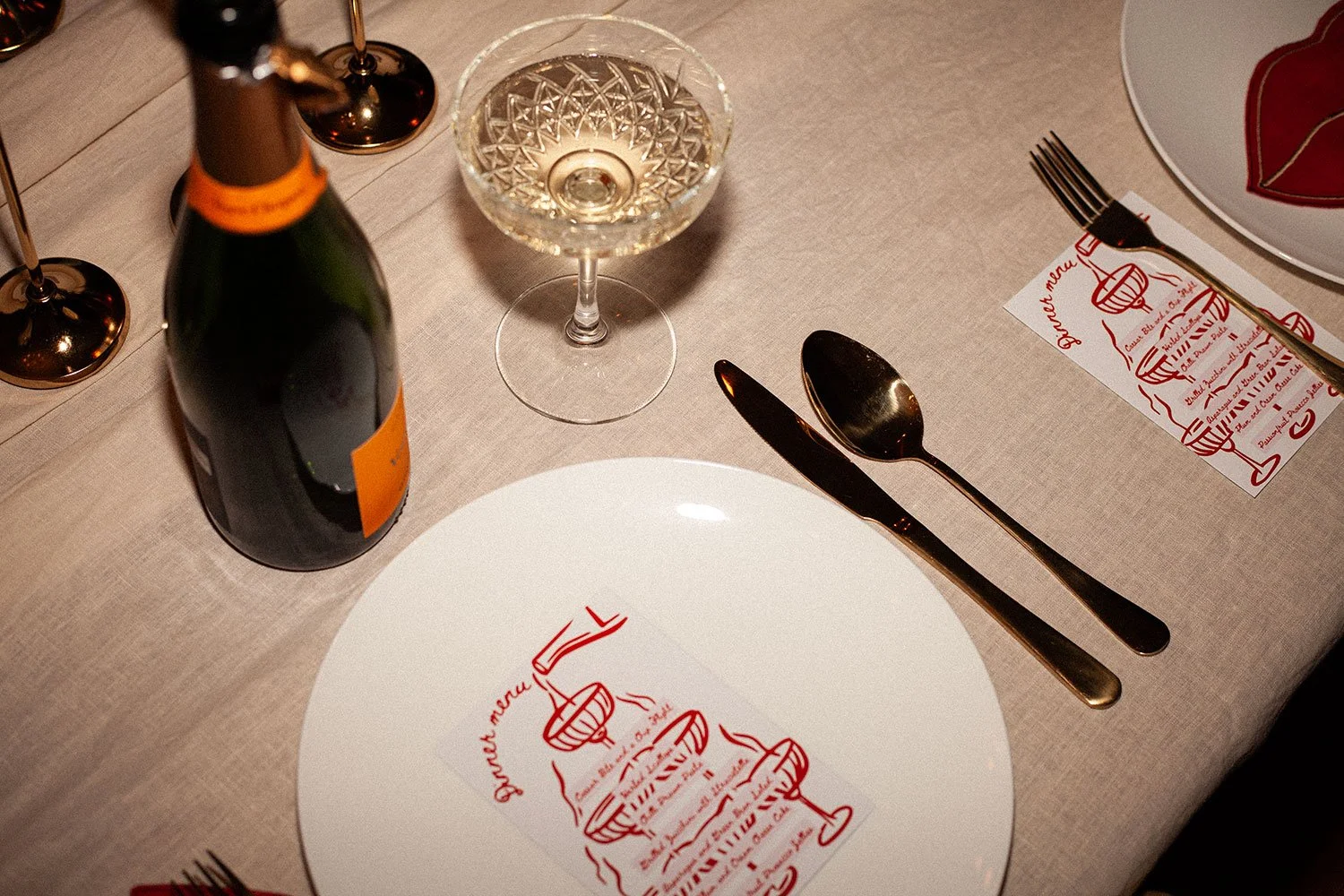
Fork on the left, knife on the right with the blade facing inward toward the plate, spoon to the right of the knife. Water glass sits above the knife. A folded napkin goes to the left of the fork or on the plate itself. Add one small intentional detail: a name card, a sprig of rosemary, or a single flower laid across each setting. Nothing elaborate, just considered. For a quick visual walkthrough on arranging service and glassware, this guide to setting the perfect table is helpful.
Lighting, music, and scent: what guests actually feel when they walk in
Lowered lighting, a playlist (here’s mine) running at conversation volume, and one scented candle (or a vase of fresh flowers) do more for a room's atmosphere than most hosts realise. Together, these cues communicate something specific to every guest who walks through the door: this space was prepared for you. That feeling of being expected and welcome is the foundation everything else is built on.
Dinner party hosting checklist: budget, etiquette, and what to pour
Generous hosting doesn't require a large grocery bill. Knowing where costs actually come from lets you spend intentionally and feel confident rather than anxious at the register. And a few etiquette basics go a long way toward making guests feel genuinely at ease.
Cost per head at three levels: budget, mid-range, and premium
Budget gatherings typically run $20 to $35 per person, mid-range events land between $40 and $65, and premium experiences start around $75 and climb well past $150. The biggest cost drivers are service style and menu complexity, not effort. A make-ahead menu planned around a focused shopping list minimises waste and keeps food costs predictable. Buying what you need and nothing more is the most underrated budget strategy in home entertaining.
A few dinner party etiquette basics worth remembering
Good dinner party etiquette isn't about formality, it's about making guests feel comfortable. Greet everyone at the door rather than calling from across the room. Introduce guests to one another with a small detail that gives them something to talk about - think Bridget Jones. Keep serving flowing without making it feel rushed. And if something goes sideways in the kitchen, don't announce it; most guests will never notice unless you tell them.
Wine pairings for three common dinner party mains
For roast chicken, reach for a Chardonnay or Sauvignon Blanc. Both have the acidity to cut through the richness of the meat, For pasta with a tomato-based sauce, Chianti is the reliable choice, its bright cherry notes and natural acidity are built for the pairing. For steak, reach for a Cabernet Sauvignon or Malbec.
Staying calm, present, and actually enjoying your own party
All the planning in this guide points toward one outcome: a host who is relaxed enough to be present at their own table. That's the real goal, and it's achievable with a few deliberate choices.
The mistakes that break a host's composure (and how to avoid them)
The most common pitfalls are predictable once you know them. Testing a brand-new recipe on guests for the first time almost always creates stress. Starting prep too late compresses every step. Skipping a meal yourself before the party leaves you hungry and irritable by dessert (or too merry). Trying to cook and host simultaneously means guests are talking to someone who's half-present. Every one of these is solved by the timeline covered earlier: front-load the work, test recipes before the night, and step away from the kitchen before anyone arrives.
How a done-for-you prep plan changes the experience
When the menu is chosen, the shopping is done, and the timeline is already mapped out, something shifts. The host stops managing logistics and starts being a host. You pour wine, join the conversation, and enjoy the food you made. That shift, from operator to participant at your own gathering, is the experience The Dinner Party Guide is designed to support. Each guide takes care of the planning layer so the evening belongs to you and your guests, not your kitchen.
You're more ready than you think
Good dinner party hosting comes down to clear decisions made early, a timed prep plan that front-loads the work, and the discipline to step away from the stove before guests arrive. Every section of this guide gives you a concrete piece of that system: the guest list and invitations, the menu framework, the six-hour countdown, the table setting, the budget, the wine, the etiquette, and the mindset to show up and enjoy it.
If you want all of that handled in a single resource, The Dinner Party Guide packages the menu, shopping list, timed prep plan, and drink recommendations into one instant download, with options across a range of occasions and party sizes. Browse the full collection of Guides and find the one that fits your next gathering.
You have everything you need to host a dinner party worth remembering. Now pick a date and send the invitation.