Stress Free Entertaining: 10 Tips That Actually Work
You've spent two hours scrolling recipe blogs. Six browser tabs are open. There's a grocery list on a sticky note, and the party is in four days. That chaos isn't a hosting problem, it's a systems problem. Stress free entertaining doesn't require a caterer, a professional kitchen, or some natural gift for improvising under pressure. It requires a few key mindset shifts and a practical plan you can actually follow.
Most entertaining guides bury you in aspirational ideas without handing you a working system. They show you the beautiful table and the finished dish without explaining how you got there without losing your mind. This article is different. These 10 tips cover everything from how you think about hosting to how you set your table the night before. Some hosts have started skipping the scattered tab-hopping entirely by using done-for-you guides that bundle every decision into one place, and that approach is worth understanding. The real problem starts earlier than the kitchen, though. It starts in how you're thinking about the evening.
The mindset shifts that change how hosting feels
Tip 1: Your energy sets the tone before guests walk in
Guests are remarkably perceptive about a host's anxiety. A relaxed host creates a relaxed room. A stressed host creates a tense one, and guests feel it the moment they walk in, even if they can't name it. Experienced hosts have long noticed that calm is genuinely contagious, your emotional state sets the psychological foundation for the entire evening within the first few seconds of arrival.
What guests actually notice is warmth and good conversation. What hosts stress over is the sauce timing, the centerpiece alignment, and whether the appetizers ran out too fast. Those things matter far less than you think. When you free yourself from chasing perfection, you show up as the host your guests came to spend time with.
Tip 2: Simple beats ambitious every single time
The single most common mistake hosts make is attempting a complicated, untested menu on party night. Trying a new recipe for the first time while managing guests, timing multiple dishes, and keeping drinks topped up is a guaranteed path to kitchen stress. Serve fewer dishes done really well instead of many dishes done under pressure. A three-course meal executed confidently will always outperform an eight-dish spread held together with anxiety.
This is why some hosts now use pre-planned, occasion-specific menus from dedicated hosting resources. When someone else has already done the testing and built the menu around dishes that work together, you eliminate decision fatigue entirely. Using a ready-made easy entertaining idea like this is one of the smartest shortcuts in no-stress hosting, and respecting your own time is part of being a good host.
The prep timeline for stress free entertaining
Tip 3: Shop 48+ hours out, never the morning of
Shopping the morning of the party is the single fastest way to start party day already behind. The 48-hour mark is when you buy perishables: fresh produce, proteins, flowers, and anything that needs time to properly store or marinate. Having ingredients in the fridge two days before the event shifts the mental load dramatically. The planning is done. The decisions are made. You're in execution mode, not scramble mode.
One practical change makes the shop itself faster: write your list by section of the store, not by recipe. Grouping produce, proteins, and pantry items by section means you move through the store without backtracking, a real time-saver on an already full week. It sounds minor. It makes a genuine difference.
Tip 4: Lock in setup and deep prep 24 hours before
Deep prep means the work that transforms raw ingredients into party-ready components: marinating proteins, washing and cutting produce, assembling any make-ahead dishes, setting non-perishable table items, and clearing surfaces guests will use. Doing this the day before means party day feels like light finishing work, not full production. The goal is to arrive at party day with most of the kitchen work already behind you.
From there, the 6-hour window handles finishing cooking, arranging the bar, and running the dishwasher. The 1-hour window is for candles, music, drinks on ice, and getting dressed. When you follow this sequence, the final hour before guests arrive feels calm rather than frantic, and that calm carries directly into the room when your first guests walk through the door. For hosts who like a more detailed breakdown, this timeline-based guide can be a useful reference for timing every step.
Build a menu for stress free entertaining
Tip 5: Choose dishes that reheat without losing quality
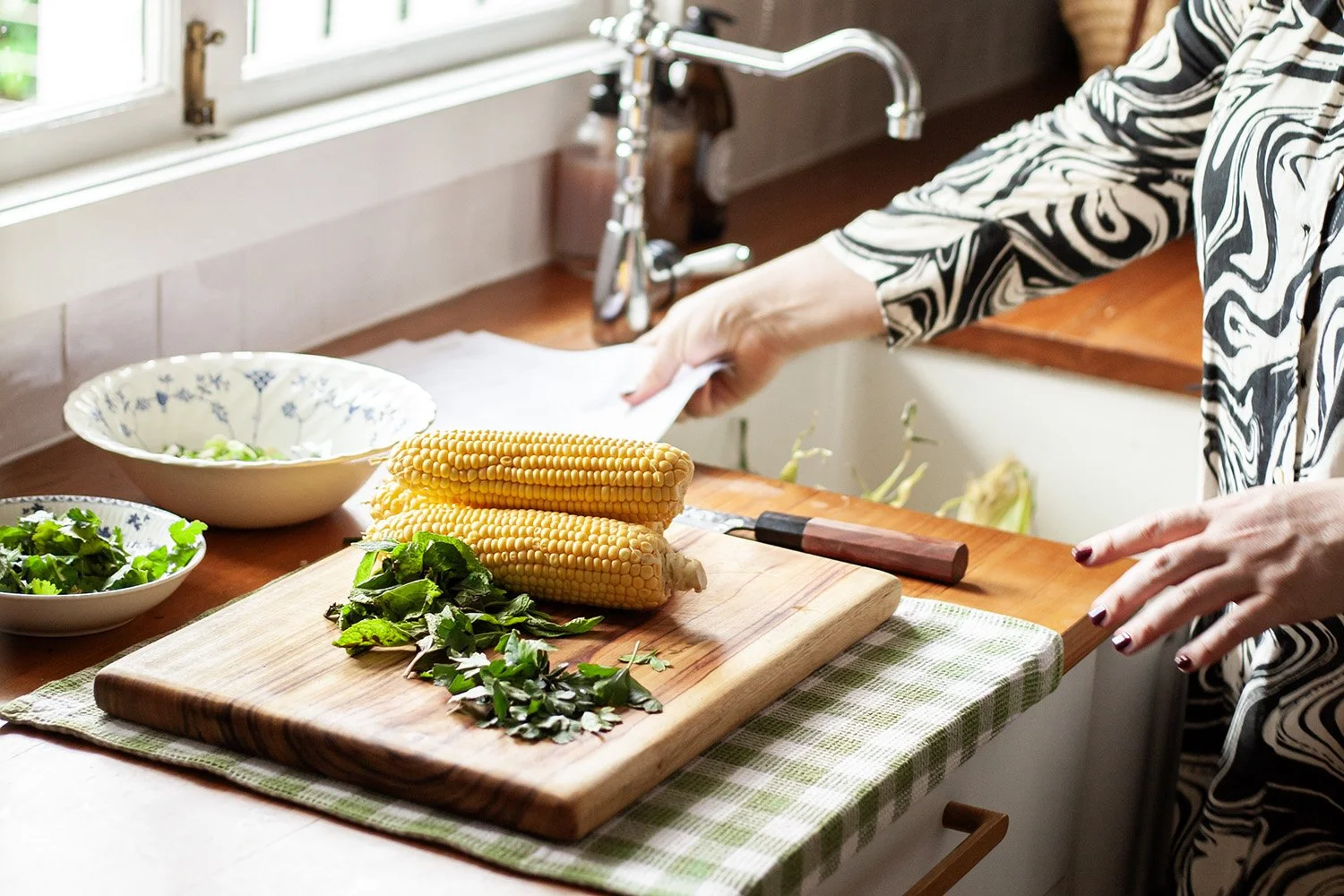
Make-ahead party recipes are the backbone of low-stress dinner party cooking. The categories that hold best are casseroles, soups, braised proteins, and layered dishes like lasagna. Sheet-pan Greek-style chicken with roasted vegetables marinates and bakes beautifully, holds its flavour, and reheats in the oven without drying out. A tomato basil bisque or a creamy chicken soup can be made a day ahead and brought back to life on the stovetop in minutes. An easy potato bake, covered and oven-reheated, serves a crowd without demanding your attention at the stove.
The reheating principle matters: oven and stovetop preserve texture far better than microwave for large batches. Airtight glass containers with labeled dates remove the guesswork entirely. You pull it from the fridge, you know exactly what it is and when it was made, and the transition from fridge to table is seamless.
Tip 6: Keep your menu focused and cohesive
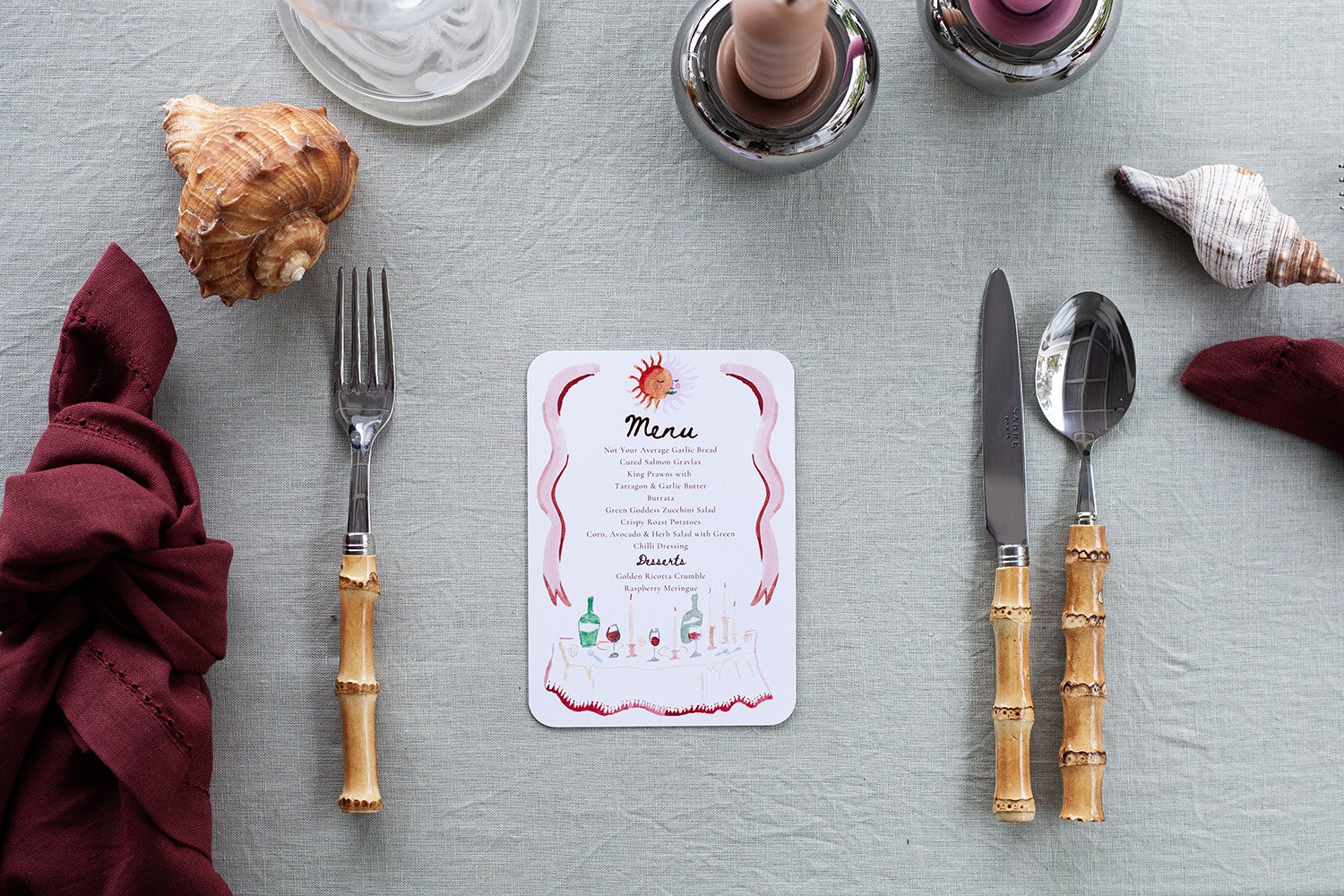
More dishes mean more prep windows, more timing conflicts, and more to wash up afterward. A well-chosen, tightly edited menu is more impressive than eight dishes that don't quite belong together. For a casual dinner party of six to eight guests, a workable structure is one or two proteins, two or three sides, and an optional appetiser pass. It's manageable, it's cohesive, and it lets you cook with focus rather than split attention. For help calculating portions and how much to prepare, a practical resource on how much food to serve can save guesswork.
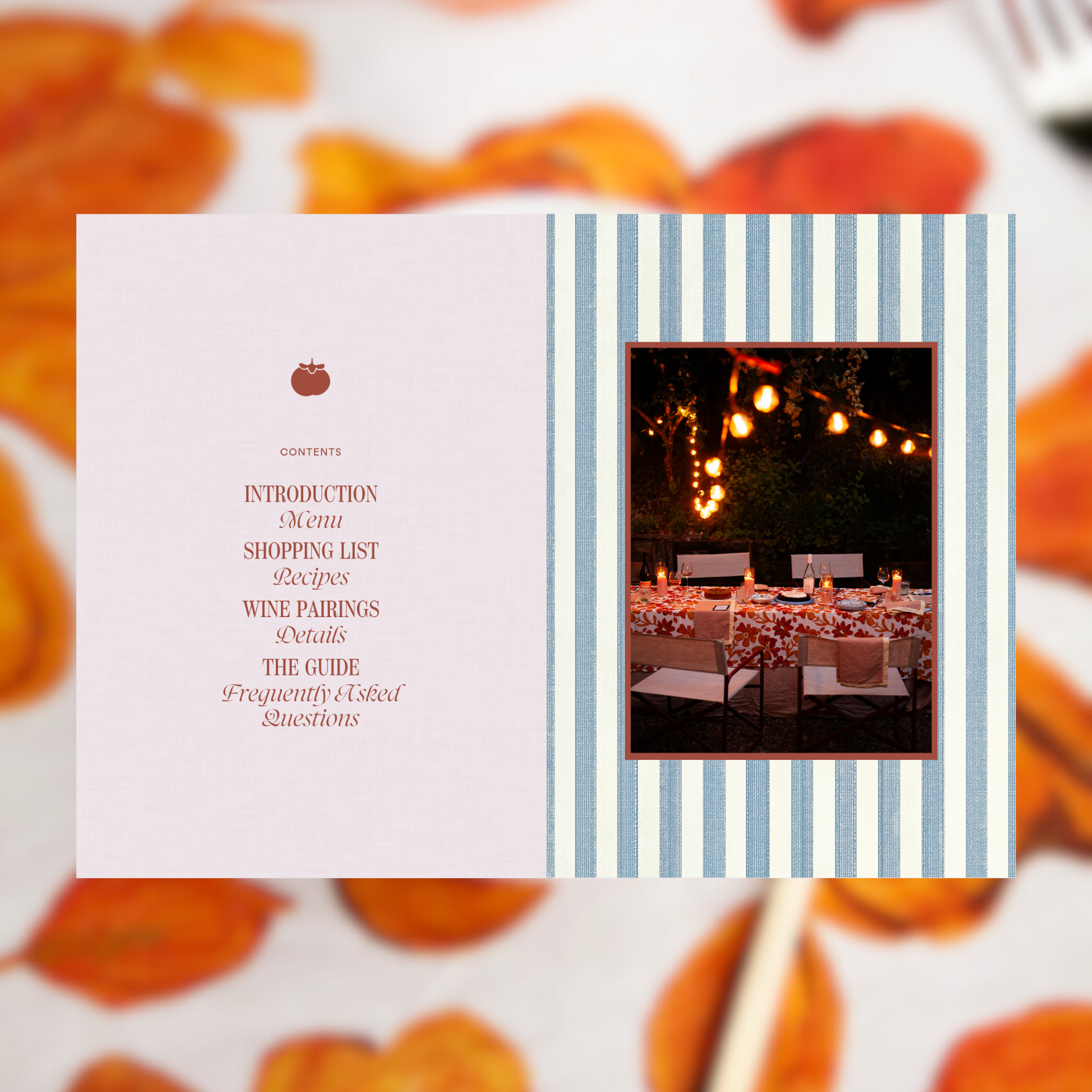
This is one reason done-for-you menus from resources like The Dinner Party Guide are genuinely useful. Every dish in a guide is chosen to work as a cohesive meal, not assembled from random searches across six different websites. The guides include recipes, a shopping list, and a timed prep plan in one download, which means you're not coordinating across multiple sources or wondering whether the dishes you've chosen will actually make sense together on the table.
Table setup and styling that takes 15 minutes, not two hours
Tip 7: Set your table the night before
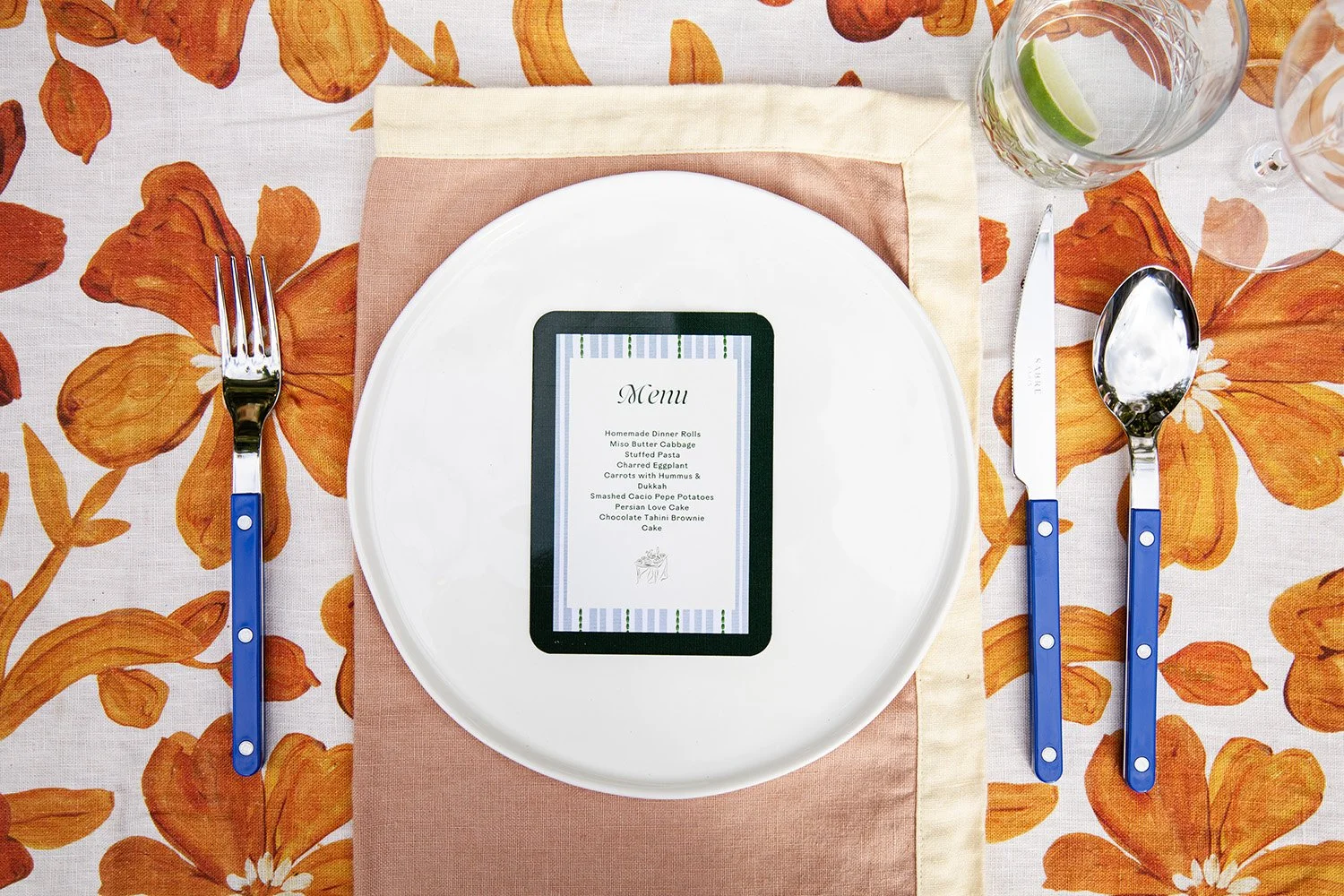
Setting your table the night before is one of the highest-leverage habits in no-stress hosting. It removes a major task from party day, it lets you see the full picture before guests arrive so you can adjust anything that doesn't look right, and it means one less thing competing for your attention during the final 6-hour prep window. Plates, glasses, cutlery, napkins, and the centrepiece can all go out the night before.
What you leave for party day is the perishable and finishing touches: fresh flowers, food platters, and lighting the candles. Everything structural is already done. A table set up to 24 hours in advance holds its presentation well if kept in a low-traffic area, which means the table you walked past all morning is the same table your guests will see that evening.
Tip 8: Build a centREpiece from what you already own
A polished centrepiece doesn't require a florist or a specific set of expensive items. Repurposed wine bottles with single stems, lemons or limes in a clear glass bowl, seasonal elements like pinecones or eucalyptus branches, and a cluster of candles in varying heights all read as intentional and designed. The goal is height variation and a sense of purpose, not a Pinterest recreation.
Delegation and staying present when it matters most
Tip 9: Ask guests to bring something, and mean it
Asking guests to contribute is not admitting defeat. It's good hosting. Guests genuinely want to feel like they're part of the gathering, not just recipients of it. Assign a specific item to a specific person: a bottle of wine, a loaf of crusty bread, or dessert. "Just bring yourself" sounds gracious but removes a natural way guests can feel invested in the evening. A specific ask gives them a role, and that role makes them feel more at home from the moment they arrive.
Hovering over guests, constantly refilling glasses, and micromanaging every detail creates tension rather than comfort. Give yourself permission to step back, sit down, and join the conversation. The party doesn't need your management. It needs your presence.
Tip 10: Stop piecing things together from 12 different sources
The stress of hosting isn't always in the cooking. It's in the coordination and the decisions. Reconciling a recipe from one blog with a timing tip from another and a shopping list you built yourself from three separate sources creates the mental weight of coordinating scattered information, and it compounds right up until guests arrive. That's the part that exhausts people, and it's entirely avoidable.
Use a resource that has done the work for you. The Dinner Party Guide is built precisely for this: one download with a curated menu, a shopping list, and a timed prep plan already structured for a real home kitchen. No more reconciling scattered sources. You open the guide, you follow the plan, and you show up to your own party as a host rather than a project manager.
Quick fixes for the most common day-of problems
When something goes wrong in the kitchen
Three kitchen mishaps come up again and again: a dish that overcooked, a dish that isn't ready on time, and running out of something. In each case, the fix is almost always simpler than the panic suggests.
Overcooked: plate it confidently, add a good sauce, and move on. Not ready: pass around bread, top up the wine, and keep the conversation going. Ran out: combine what's left with another dish and call it intentional.
How to stop hovering and actually enjoy your own party
The host who never sits down is the most common pattern in home entertaining, and it's also the one most likely to make guests feel like they're intruding on a work shift. Assign one person to manage drink refills. Put out a self-serve station for wine and water. Give yourself explicit permission to sit down for the first course and stay there. The moment you visibly relax, the energy in the room shifts. Your guests follow your lead, and that's exactly where you want them.
Stress free entertaining is a system, not a talent
Effortless entertaining isn't about eliminating every variable. It's about removing the decisions that don't need to be made on the day. The through-line across all 10 tips is the same: mindset first, systems second, presence last. Start calm and keep it simple. Build your timeline around the 48-hour, 24-hour, 6-hour, and 1-hour windows. Cook make-ahead dishes that hold beautifully. Set your table the night before. Delegate, sit down, and be there for the people who came to see you.
For hosts who want a proven party planning checklist without the research hours, The Dinner Party Guide brings it all together in one instant download: a timed prep plan, a curated menu, and a complete shopping list. Every guide is occasion-specific and designed for a real home kitchen. That's what stress free entertaining looks like made practical.
Pick up a guide before your next gathering. Party planning should feel like something you're looking forward to, not something you're surviving.