The Dinner Party Checklist: Everything You Need to Do, In the Right Order

Most dinner parties go wrong not because of bad cooking but because of bad sequencing. Tasks pile up on the day, the host falls behind, and by the time guests arrive someone is still in an apron and nothing is close to ready. The fix is not more effort — it is doing the right things in the right order.
This checklist covers the full arc of hosting a dinner party, organised by timeframe so you always know what needs to happen next. If you want the planning done for you entirely — menu chosen, shopping list written, prep plan timed — The Dinner Party Guide offers downloadable hosting guides that handle all of it in one place. But if you are building it yourself, this is where to start.
One to Two Weeks Before
Finalise your guest list and headcount
Headcount drives every other decision: portion sizes, table configuration, how much cooking you can realistically manage. Four to six guests is a manageable starting point if this is your first or second dinner party. Eight to ten is achievable with a well-structured make-ahead menu. Beyond that, the logistics shift considerably.
Send invitations with an RSVP deadline
For a casual sit-down dinner, one to two weeks notice is sufficient. For a more formal occasion, three to five weeks is better. A good invitation includes the date, start time, address, and a rough end time — the last detail is small but thoughtful, and helps guests with early mornings or childcare plan accordingly.
Ask about dietary restrictions before you plan a single dish
This is the step most first-time hosts skip. Ask every guest about allergies, intolerances, and preferences before you finalise the menu. One short message protects you from assembling a dinner that someone at the table cannot eat. If anyone has a severe allergy, be mindful of cross-contamination during prep, not just in the final dish.
Choose your menu
Once you know your headcount and any dietary requirements, build a menu around dishes that can be largely prepared in advance, hold their quality when plated, and do not all require the oven at different temperatures at the same time. For more on how to structure this, see the dinner party menu planning guide. If you would rather skip the build-it-yourself approach, The Dinner Party Guide delivers a complete menu with recipes, shopping list, and timed prep plan in a single download.
Three to Five Days Before
Write your shopping list and split it into two shops
The first shop handles everything non-perishable: pantry staples, wine, candles, any décor. The second shop, done one to two days before, covers fresh produce, meat, fish, and dairy. Splitting the shops this way means nothing sits in the fridge too long and you are not doing one overwhelming run the day before.
Check your equipment
Go through the menu dish by dish and confirm you have what you need: the right baking dish, enough serving platters, sufficient glasses. There is nothing worse than discovering on the night that you own one oven-proof dish and the menu needs three. Borrow or buy anything missing now, not the day before.
Plan your table configuration
Work out where guests will sit, whether you need to borrow or hire any chairs, and how the table will be set. If you are seating eight or more, sketch a rough seating plan — it makes the pre-dinner logistics considerably smoother. If you’re concerned about the size of your table, the wonders of a folding table knows no bounds!
One to Two Days Before
Do your fresh shopping
Pick up produce, meat, fish, and anything with a short shelf life. If you are making bread, pastry, or anything that improves with a day of rest, today is the day.
Prepare every make-ahead component
This is the most valuable time investment in the entire process. Cook anything that improves overnight — slow-cooked proteins, soups, stews, desserts that need to set, dressings, marinades. The more you complete today, the smaller the day-of workload.
Set aside your utensils and serving dishes. Use post its to mark up the serving dishes. Not having to think about this when your guests are in the house - or in the kitchen - game changer!
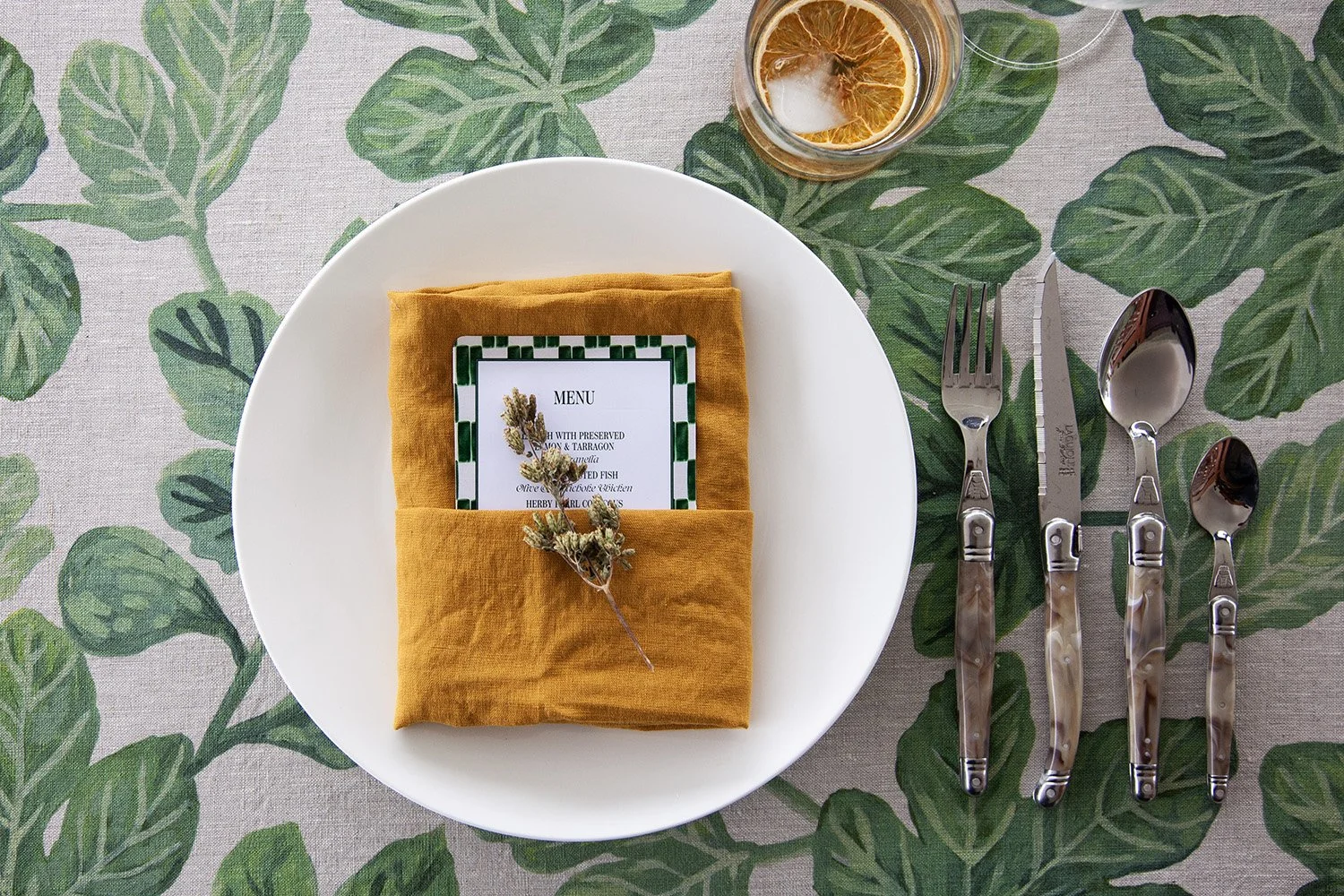
Set the table
Setting the table the day before is one of the highest-leverage things you can do. It takes the task entirely off the day-of list, and it means you can take your time doing it well.
Prepare the guest bathroom
Fresh towels, a clean hand soap, and a small candle or bunch of flowers. It takes ten minutes and guests notice.

The Morning Of
Review the full menu and timeline
Read through every dish and confirm the sequence: what needs to come out of the fridge when, what goes in the oven first, what gets plated while something else rests. Cross-reference with your dinner party hosting timeline if you have one. The goal is no surprises in the afternoon.
Prep all fresh components that can be done ahead
Wash and dry salad leaves. Slice garnishes. Prepare cheese boards or grazing arrangements. Make anything that can be assembled now and finished later. The more granular this prep, the calmer the afternoon.
Set up the bar
Arrange glassware, open and decant any red wine that needs it, and set out bottles. If you are serving a batch cocktail or a drinks station, set it up now so it only needs ice added before guests arrive.
Run the dishwasher
An obvious step that is frequently missed. You want a clean dishwasher and empty dish rack before cooking begins, so you have somewhere for prep bowls and utensils to go.
Two to Three Hours Before Guests Arrive
Begin the cooking sequence
This is when the day-of cooking happens. Work through the menu in order, starting with anything that takes longest or needs the most passive time. Anything already prepared yesterday simply needs to be taken out, finished, or reheated at the right moment.
Wipe down and tidy the main spaces
Kitchen benches, the dining area, and the entry hallway. Focus on surfaces guests will see and touch rather than the entire house.
Adjust lighting and put the music on
Lower lighting and a playlist running at conversation volume do more for the atmosphere than most hosts realise. Get both in place now so you are not fiddling with them when guests arrive. Here’s my playlist that is tried and tested over many a table - The Dinner Party Guide Spotify Playlist.

30 Minutes Before Guests Arrive
Get dressed
Not a throwaway point. Getting out of your cooking clothes and into what you are wearing for the evening signals to your own brain that the host shift has begun. It changes how you carry yourself when guests walk in.
Final table check
Fill water glasses, set out the bread or pre-dinner nibbles, light the candles.
Take a breath
You are ready.
When Guests Arrive
Greet everyone at the door
Not from across the room, not from the kitchen. At the door. It sets the tone for the entire evening.
Introduce guests with a detail that gives them something to talk about (Bridget jones style)
Not just names — a small connection or interesting fact. "This is Sarah, she just got back from six months in Japan" gives two strangers an immediate conversation. It is the single most underrated hosting skill.
Keep drinks flowing without making it feel managed
A self-serve drinks station removes this pressure entirely. Guests top up when they want to, you are not constantly monitoring glasses, and the evening feels relaxed rather than orchestrated.
The Day After
Load the dishwasher, return anything borrowed, and note anything for next time: what worked on the menu, what you would change, whether the timeline held. The hosts who get better at this consistently are the ones who reflect (like everything in life!) briefly after each dinner rather than just collapsing with relief.
The checklist works because it distributes the work evenly across the days before the dinner, rather than allowing it to compress into a single frantic afternoon. Use it as a framework, adjust it to your menu and your space, and it will hold.
If you want the menu, shopping list, and timed prep plan handled in one place, The Dinner Party Guide packages all of it into a single downloadable resource across a range of occasions and guest counts. Browse the full collection and find the one that fits your next gathering.
Pick a date. Send the invitation.