Dinner Party Table Setting Ideas
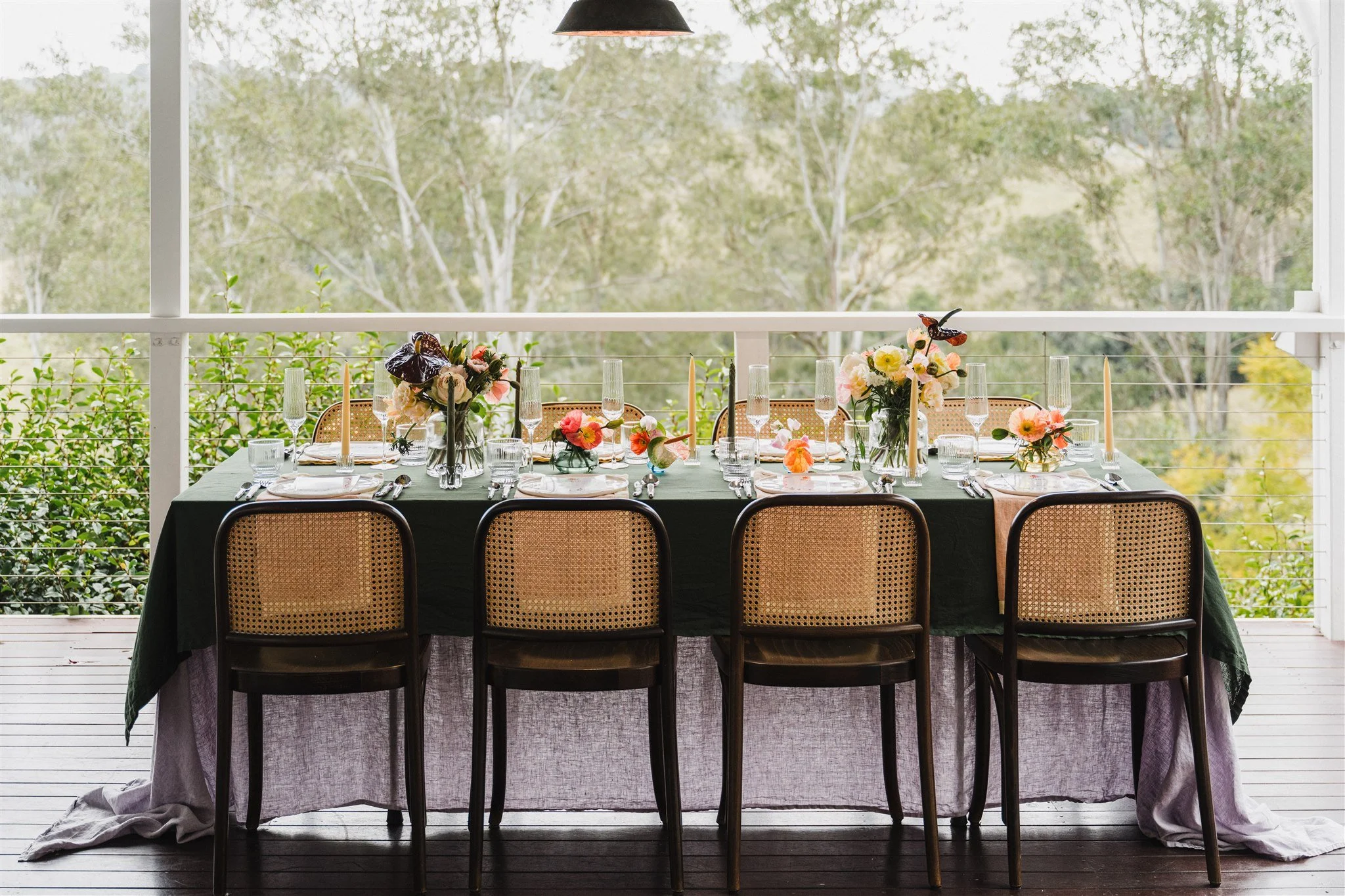
The table is the first thing guests see when they sit down, and it is what they are looking at for the next two to three hours. It does not need to be elaborate — in fact, elaborate tablescapes often read as effortful rather than welcoming. What works is a table that looks considered: a few deliberate choices, consistently applied, that tell guests the evening was prepared with them in mind.
This guide covers every element of a dinner party table setting, from the basics of a place setting through to centrepieces, lighting, and the finishing touches that take a table from functional to memorable. Most of it can be done the evening before, which is exactly when it should happen.
The Place Setting: Get the Basics Right First
Everything else on the table is dressing. The place setting is the foundation, and getting it right takes about 30 seconds per seat once you know the layout.
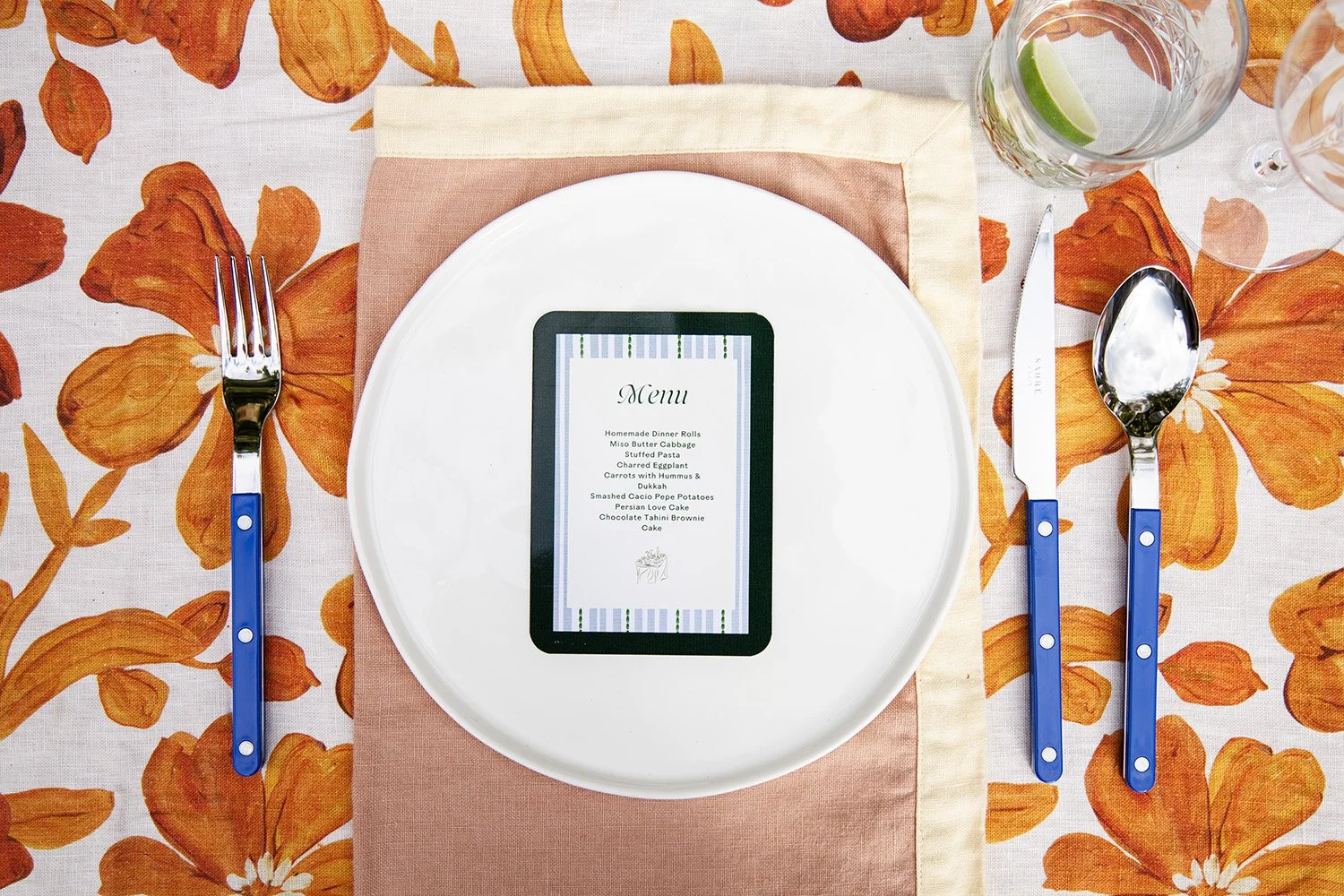
The standard layout:
Dinner plate in the centre
Fork to the left of the plate
Knife to the right of the plate, blade facing inward toward the plate
Soup spoon to the right of the knife, if you are serving soup
Dessert spoon and fork above the plate, horizontal, handles pointing right and left respectively — or bring these with dessert if space is limited
Water glass above the knife
Wine glass to the right of the water glass
Napkin to the left of the fork, or folded on the plate
The goal is consistency across every place setting, not perfection. Walk around the table once everything is set and adjust any plates or glasses that are noticeably out of line. Guests notice when a table looks even; they do not consciously notice when it is geometrically precise.
One detail that elevates any place setting
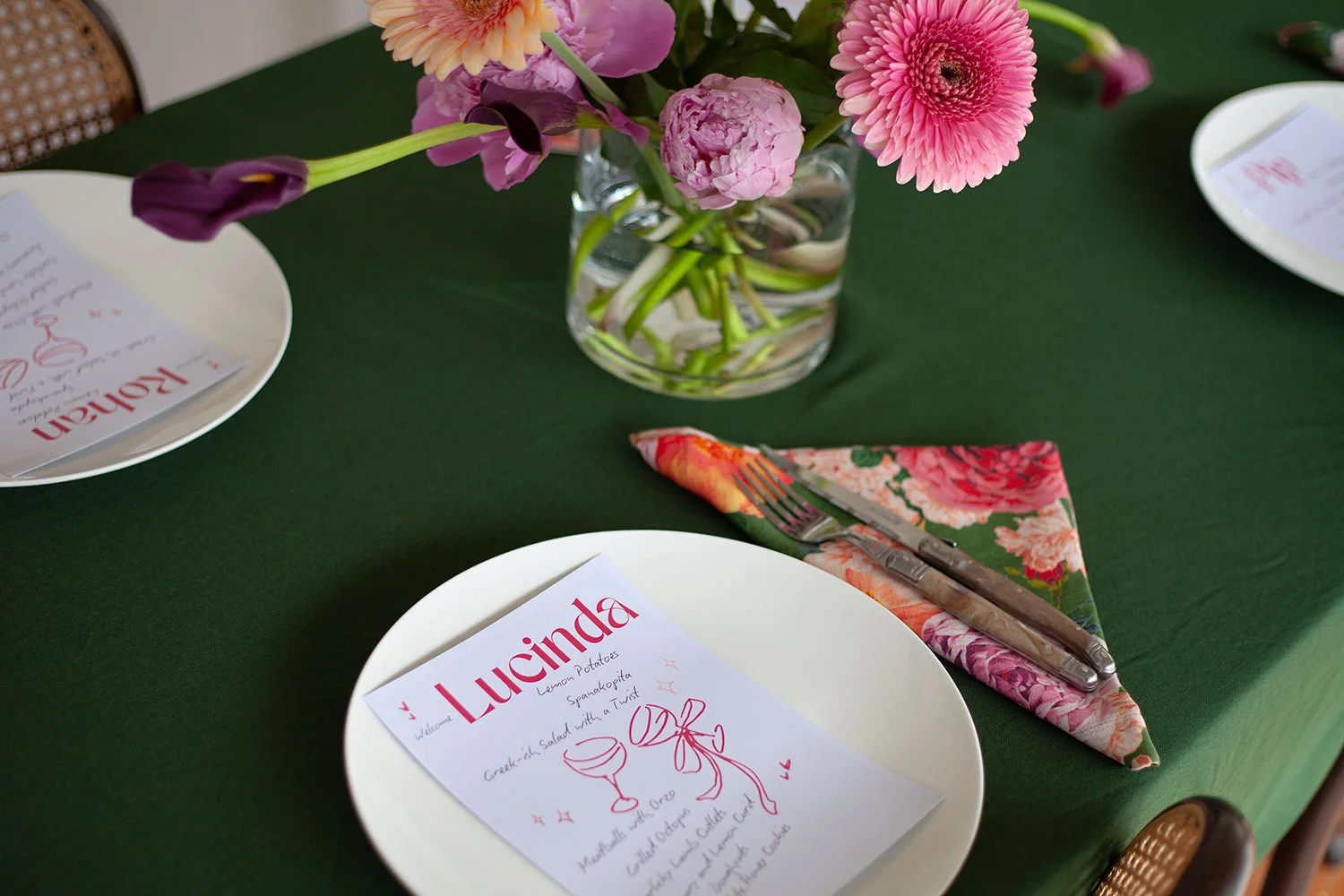
Something small and intentional at each seat. A name card. A printed menu. A single flower laid across the napkin. A sprig of rosemary or a piece of ribbon around the napkin. None of these take more than a few minutes for a table of eight, and all of them communicate the same thing: the host was thinking about the guests before they arrived.
Tablecloth or No Tablecloth
Both work. The choice depends on your table and the tone of the evening.
Tablecloth: Adds warmth and formality, covers an imperfect table surface, softens acoustics slightly, and gives you a colour or texture to build around. White linen is the most versatile option. Natural, oatmeal, or soft sage are strong alternatives for a more relaxed setting. Avoid anything with a bold pattern unless it is the only piece of décor on the table — pattern competes with food and flowers.
No tablecloth: Works well on a beautiful timber or stone surface. Use placemats — linen, woven jute, or leather — to define each setting and protect the surface. A table runner down the centre adds visual structure without covering the whole table.
If you are hosting outdoors, a tablecloth is strongly recommended — it adds weight, looks more intentional, and frames the table in a way that placemats alone do not manage. For more on outdoor settings, see how to host a summer outdoor dinner party.
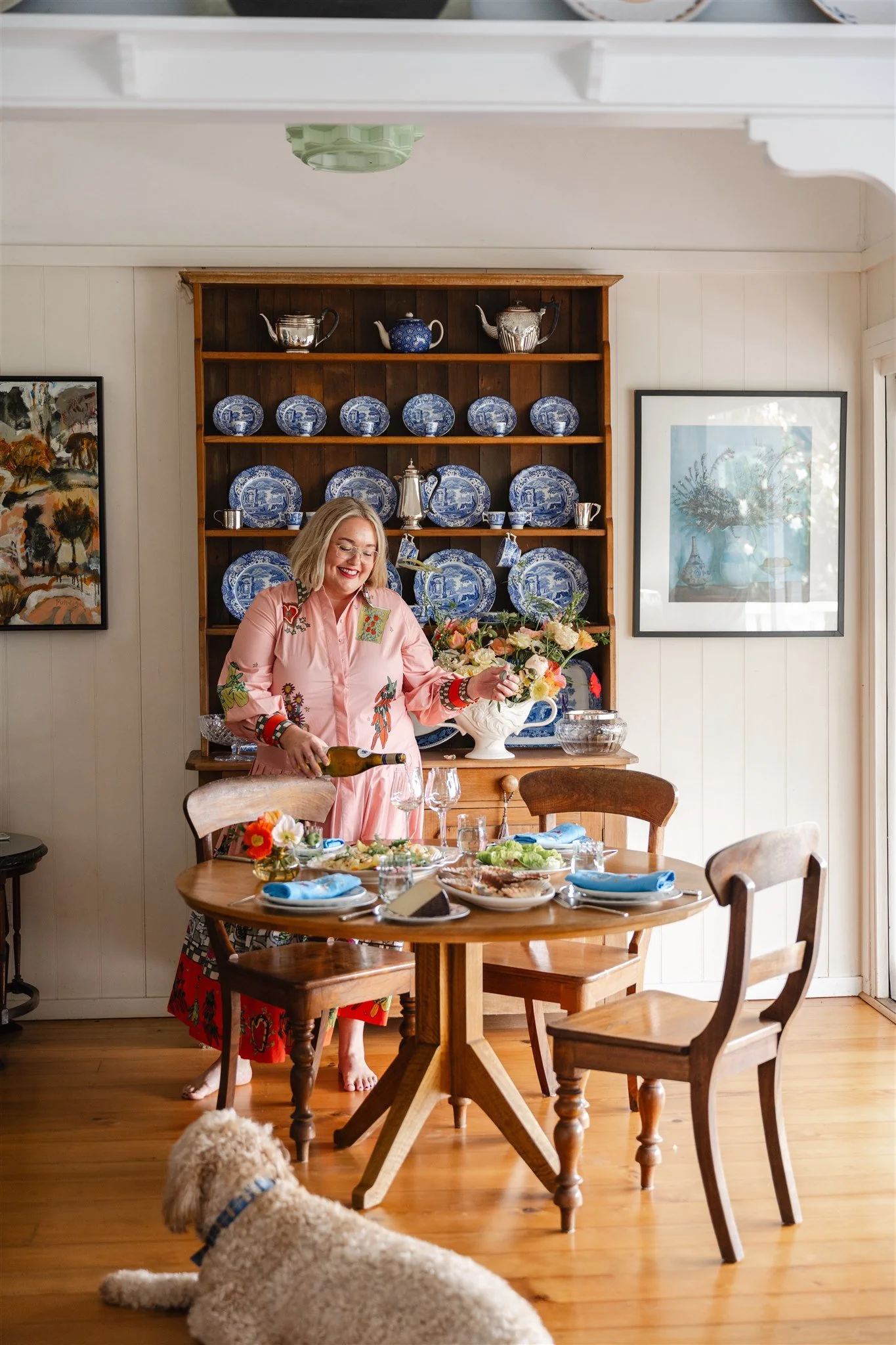
Centrepieces: The Most Overthought Element
The centrepiece has one job: to add something to the table without getting in the way of conversation. That means it should be low enough that guests can see each other across it, not so large that it dominates the table, and not so fragrant that it competes with the food.
Flowers
The most reliable centrepiece. A loose arrangement in a heavy vase, or several small vases with a few stems each, works for almost any occasion. Use whatever is in season — seasonal flowers are always cheaper, always fresher, and always look more considered than imported blooms out of context. If you have no garden and no florist budget, a bunch of supermarket flowers in a clear glass vase with the lower leaves removed is perfectly good.
Herbs
Small pots of rosemary, lavender, or basil down the centre of the table are practical and beautiful. They smell good without being overpowering, they double as a garnish if you need one, and they look genuinely intentional.
Candles
Either as a centrepiece or alongside flowers. Use pillar candles in hurricane lanterns or low candlesticks so they do not block sightlines. Avoid heavily scented candles at the table — they compete with food. Unscented or very lightly scented is the rule.
Fruit and produce
A cluster of figs, a bowl of lemons, artichokes, or small pumpkins depending on the season. Unexpected, visually interesting, and often more striking than flowers. Works particularly well for rustic or Mediterranean-style menus.
What to avoid
Anything taller than about 30cm at its highest point. Anything so fragrant that the smell of dinner is competing with the smell of the table. Elaborate arrangements that took three hours to assemble — guests often feel guilty about disrupting them when they reach across the table.
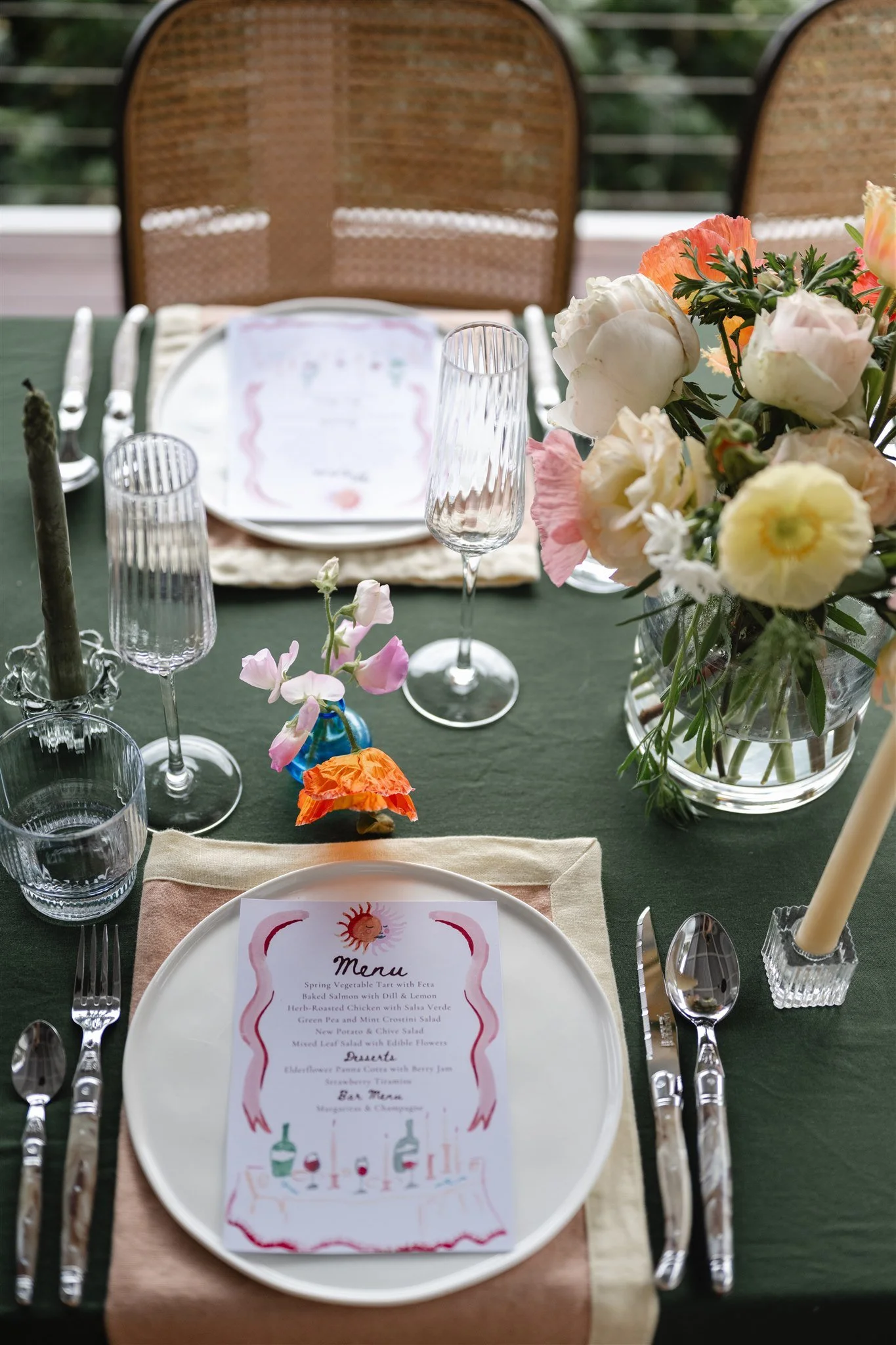
Napkins: A Small Detail With Significant Impact
A well-folded or well-presented napkin is one of those details guests notice without knowing they noticed it.
The simplest options are often the best: a napkin folded in thirds and placed to the left of the fork, or folded in half and placed on the plate. Either looks clean and considered.
If you want to add a small detail: tie the napkin with a piece of linen twine and tuck a sprig of herbs underneath. Or use a napkin ring — plain metal or natural rattan both work across most table styles. Or simply fold the napkin into a pocket and slide the menu card inside.
Match napkin colour to your tablecloth or placemats, or use it as a deliberate contrast. A terracotta linen napkin on a white tablecloth. A deep blue napkin on a natural linen base. The contrast should be intentional, not accidental.
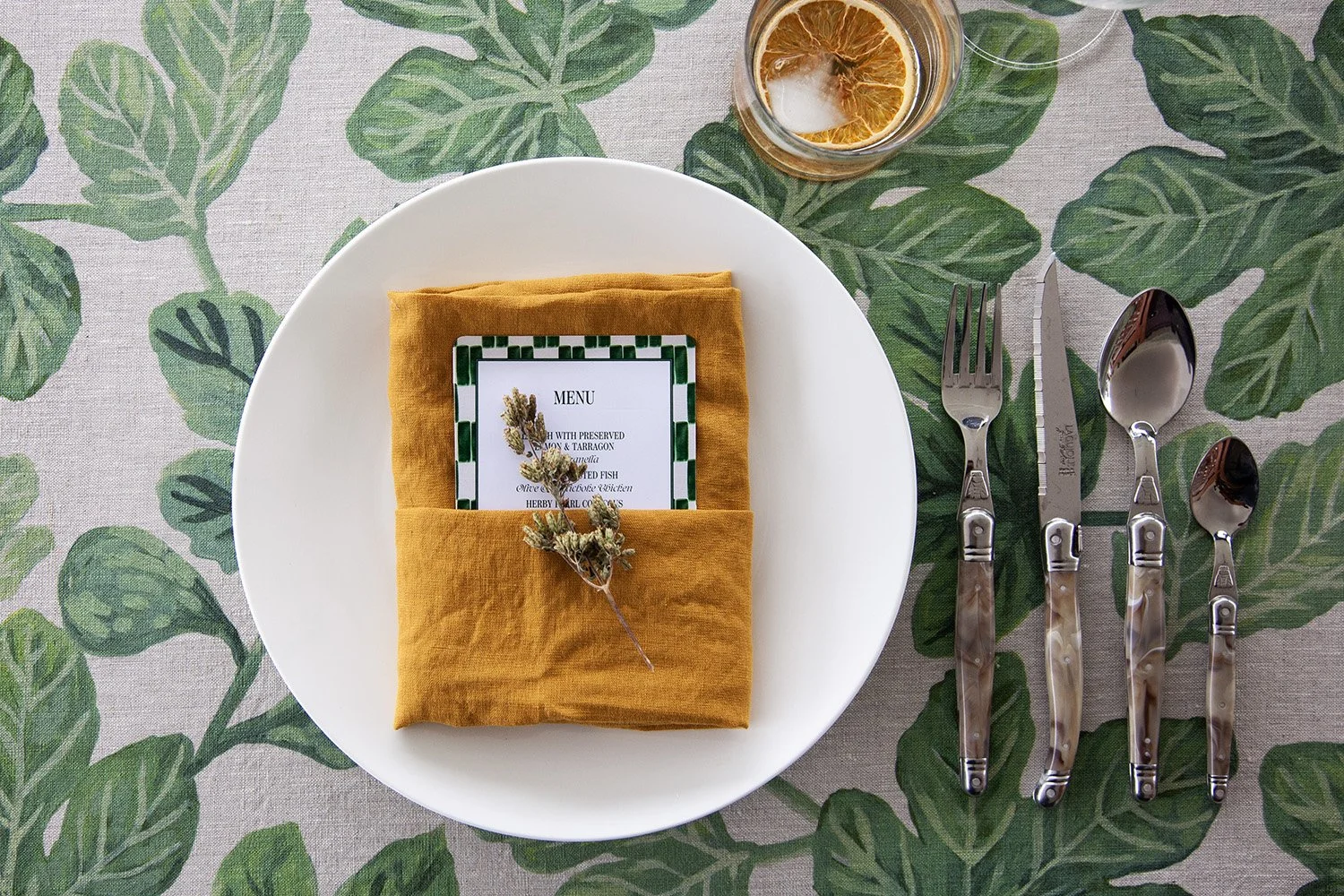
Lighting: What Changes the Room More Than Anything Else
Lower the main lighting before guests arrive. This single action does more for the atmosphere of a dinner party than any centrepiece or table arrangement. Overhead lighting at full brightness makes a room feel functional. Lowered lighting, supplemented by candles, makes it feel like an occasion.
Candles at the table are non-negotiable for a dinner party setting. They add warmth that no electric light source replicates, and they give the table a focal point that reads as intentional from the moment guests sit down. Two or three candles of varying heights, or a cluster of votives, is enough.
Dimmer switches are the host's best friend. If yours are fixed, swap a standard bulb for a warm-toned one and supplement with lamps rather than overhead light.
String lights for outdoor settings or for living spaces adjacent to the dining area — see the summer outdoor dinner party guide for how to use these effectively outside.
The Finishing Touches That Take Ten Minutes and Look Like They Took Longer
Menus
Print or handwrite a simple card with the courses listed. Place one at each setting or stand one in the centre of the table. It gives guests something to read as they sit down, it signals that the meal has been thought about, and it is a remarkably simple detail that reads as formal without requiring formality.
Name cards
Particularly useful for eight or more guests. Write each guest's name on a small card or folded piece of card and place it at their seat. This removes the awkward moment of guests standing looking at each other deciding where to sit, and it gives you control over who is seated next to whom — which is one of the most underrated tools in a host's kit.
Water already poured
Fill water glasses before guests sit down. It is a small thing that communicates attentiveness, and it removes one task from the moment everyone arrives at the table.
Bread on the table
Good bread (focaccia is my favourite!), already sliced or torn, in a basket or on a board in the centre of the table. Guests who arrive hungry have something immediate, and it signals that the evening has properly begun.
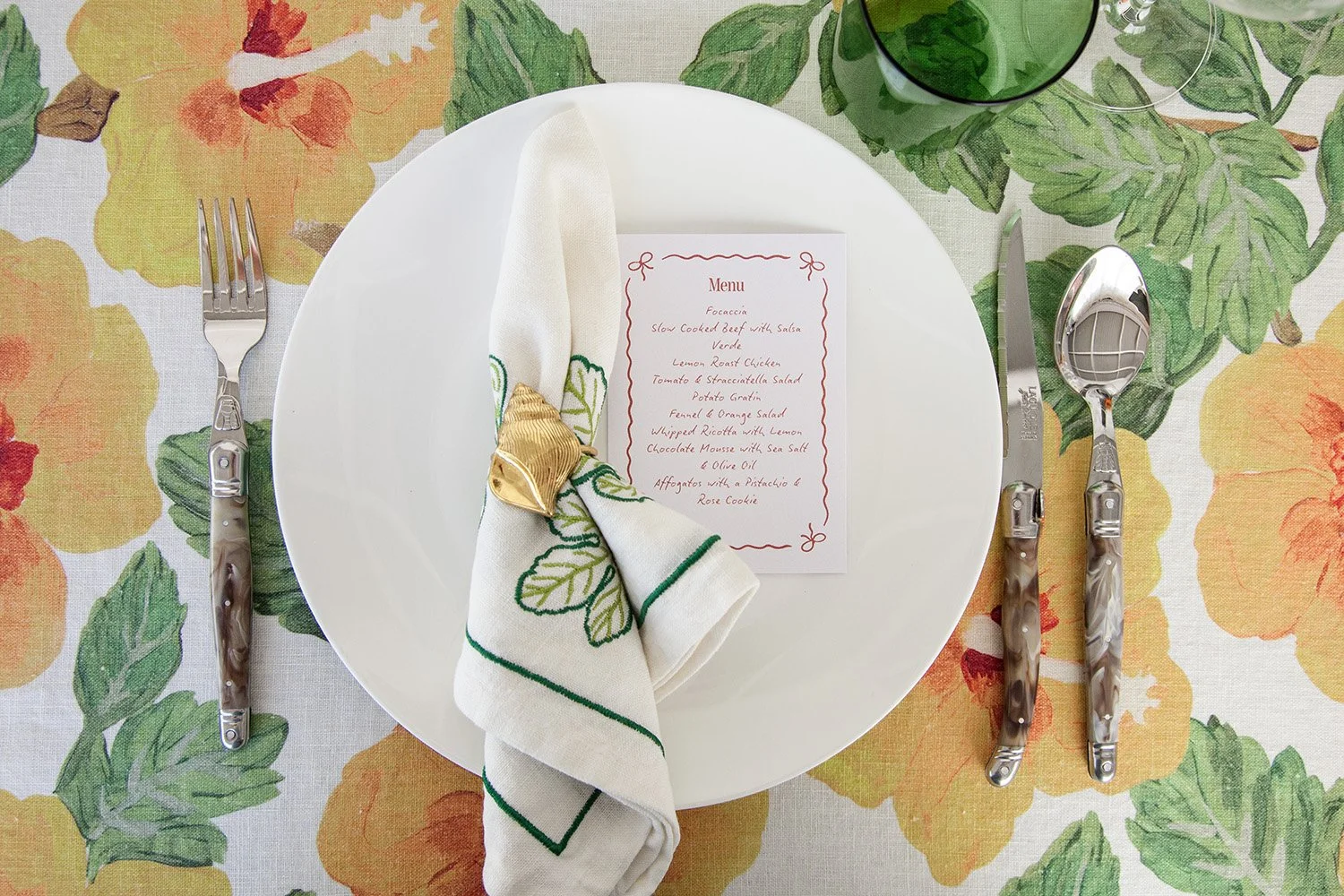
When to Set the Table
The evening before is ideal. It takes the task entirely off the day-of list, it means you can take your time, and a set table the morning of your dinner party is one of those small visual confirmations that you are actually ready — which does more for hosting confidence than almost anything else. Cover it loosely with a clean sheet or tablecloth overnight to keep dust off.
If setting the night before is not possible, set the table as the first task of the afternoon, well before any cooking begins.
The table does not need to be a production. It needs to be consistent, low-maintenance enough to ignore once it is done, and just considered enough that guests feel expected. That combination — prepared but not overworked — is the baseline of good dinner party hosting.
For the full pre-party planning sequence, see the [dinner party checklist](#). For a breakdown of how formal or casual your setting should be, see [formal vs casual dinner party — what's the difference and how to choose](#).
If you want the entire evening handled — menu, shopping list, timed prep plan and drink pairings — browse the full collection at The Dinner Party Guide.