The Dinner Party Hosting Timeline
Every experienced host was a beginner once, and most of them made the same mistakes: an over-ambitious menu, prep left too late, a kitchen in chaos when the doorbell rang. The good news is that hosting a dinner party well is a learnable skill — and the learning curve is far less steep than most first-time hosts expect.
The tips in this guide are not about cooking. They are about the decisions that determine whether the evening is enjoyable or exhausting, for the host as much as the guests. Get these right on your first dinner party and you will want to host another one immediately.
1. Start Smaller Than You Think You Should
The most common beginner mistake is inviting too many people. Six guests sounds manageable in the planning stage. On the evening, when you are trying to get six portions of everything to the table at the right temperature, while also being present in the conversation, while also managing the kitchen — six is a very different number than it seemed.
For a first dinner party, four guests is the right number. Four people fits naturally around most dining tables, allows for a single conversation the whole evening, and stays within the range that most home kitchens can manage without strain. It is also the number at which the consequences of something going slightly wrong are easiest to absorb.
You will host larger dinners once you have done it a few times. For now, four.
2. Cook Something You Have Made Before
The second most common beginner mistake is choosing a menu based on what sounds impressive rather than what you actually know how to cook.
A dinner party is not a cooking audition. Guests are not there to evaluate your technique — they are there to enjoy an evening in your home. A dish you have cooked three times before, that you can produce confidently without referring to the recipe, that you know tastes good: this is the right choice. A recipe you have bookmarked but never made, that requires a technique you have not practised, that you are cooking for the first time on the night: this is the wrong choice.
Write down five dishes you cook well. The dinner party menu is almost certainly inside that list.
3. Build a Make-Ahead Menu
A make-ahead menu is not a shortcut. It is the correct approach to dinner party cooking, and it is the single biggest factor in whether a host is relaxed or frantic on the evening.
A make-ahead menu means that the majority of the cooking happens the day before. On the day itself, the work is finishing, assembling, and reheating — not cooking from scratch. When the cooking is done before guests arrive, the host is free to be present in the room rather than managing the kitchen.
The dishes that suit a make-ahead approach are also the dishes that tend to taste best at a dinner party: slow braises, soups, stews, assembled starters, desserts that set in the fridge. For a full breakdown of how to build a make-ahead menu, see the [make-ahead dinner party menu guide]
4. Make a Written Plan — And Use It
Hosting a dinner party without a written plan is like cooking without a recipe. You might get there, but the cognitive load of keeping everything in your head at once is exactly the kind of stress that shows on your face when guests arrive.
A basic hosting plan covers:
- The menu — every dish, every course
- The shopping list — every ingredient, split into two shops
- The prep plan — what gets done on which day
- The day-of timeline — what happens and in what order
Writing this down takes 30 minutes. It replaces several hours of low-level anxiety about whether you have forgotten something.
For a ready-made version of this plan, the [dinner party checklist](#) covers the full sequence from the week before to the moment guests arrive. The [dinner party hosting timeline](#) covers the day itself in detail.
5. Set the Table the Night Before
Table setting is a task that most beginners leave for the afternoon of the dinner, when it competes with cooking, cleaning, and getting dressed. It should happen the evening before.
Setting the table the night before removes the task entirely from the day-of list, means you can do it properly without rushing, and produces a small but significant psychological benefit: walking into your dining room on the morning of the dinner and seeing a set table is one of the most reassuring things a host can experience. It is concrete evidence that you are, in fact, prepared.
Cover the table with a clean sheet overnight. For guidance on how to lay the place settings and what to put in the centre, see [dinner party table setting ideas](#).
6. Do Not Try to Cook and Host at the Same Time
This is the fundamental error that most first-time hosts make. They plan a menu that requires active cooking at service time — a risotto that needs stirring, a steak that needs to rest and be sliced, a sauce that needs finishing — and then discover that cooking and hosting simultaneously means doing both badly.
The cook and the host are different roles. The cook's job ends before guests arrive. The host's job begins when the doorbell rings. Building the menu around make-ahead cooking, and finishing that cooking before the first guest is at the door, is what allows the transition from one role to the other.
If you are still in the kitchen when guests arrive, something went wrong in the planning. Not the cooking — the planning.
7. Have a Buffer
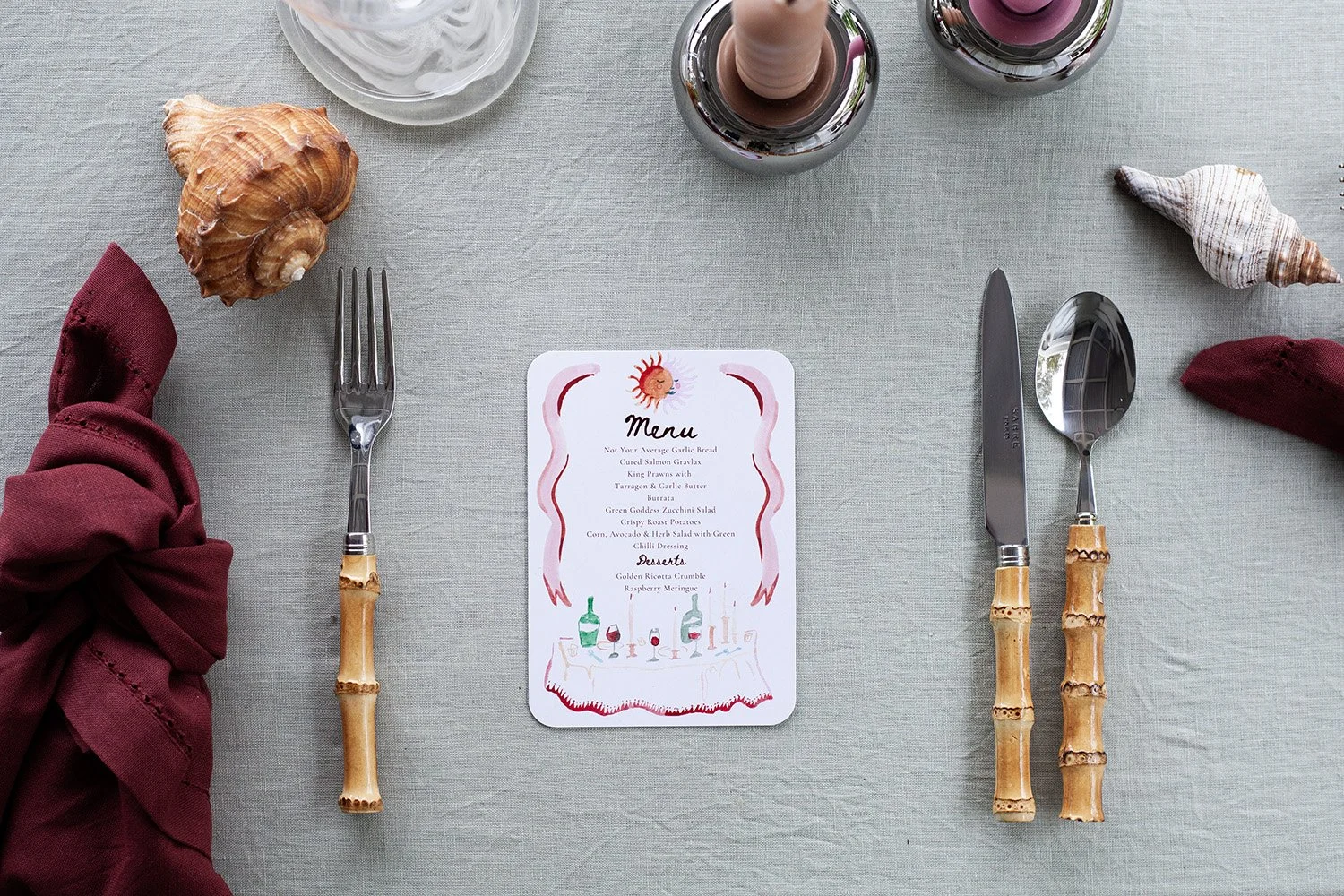
Every experienced host keeps a buffer: something that requires nothing from the kitchen and can extend the pre-dinner window or fill a gap if a course takes longer than expected.
Good bread and quality butter is the simplest buffer. A bowl of olives. A piece of cheese with crackers. Something guests can help themselves to without any intervention, that buys you 15 to 20 minutes if you need them.
You probably will not need it. Having it means you are not in trouble if you do.
Prepare every make-ahead component
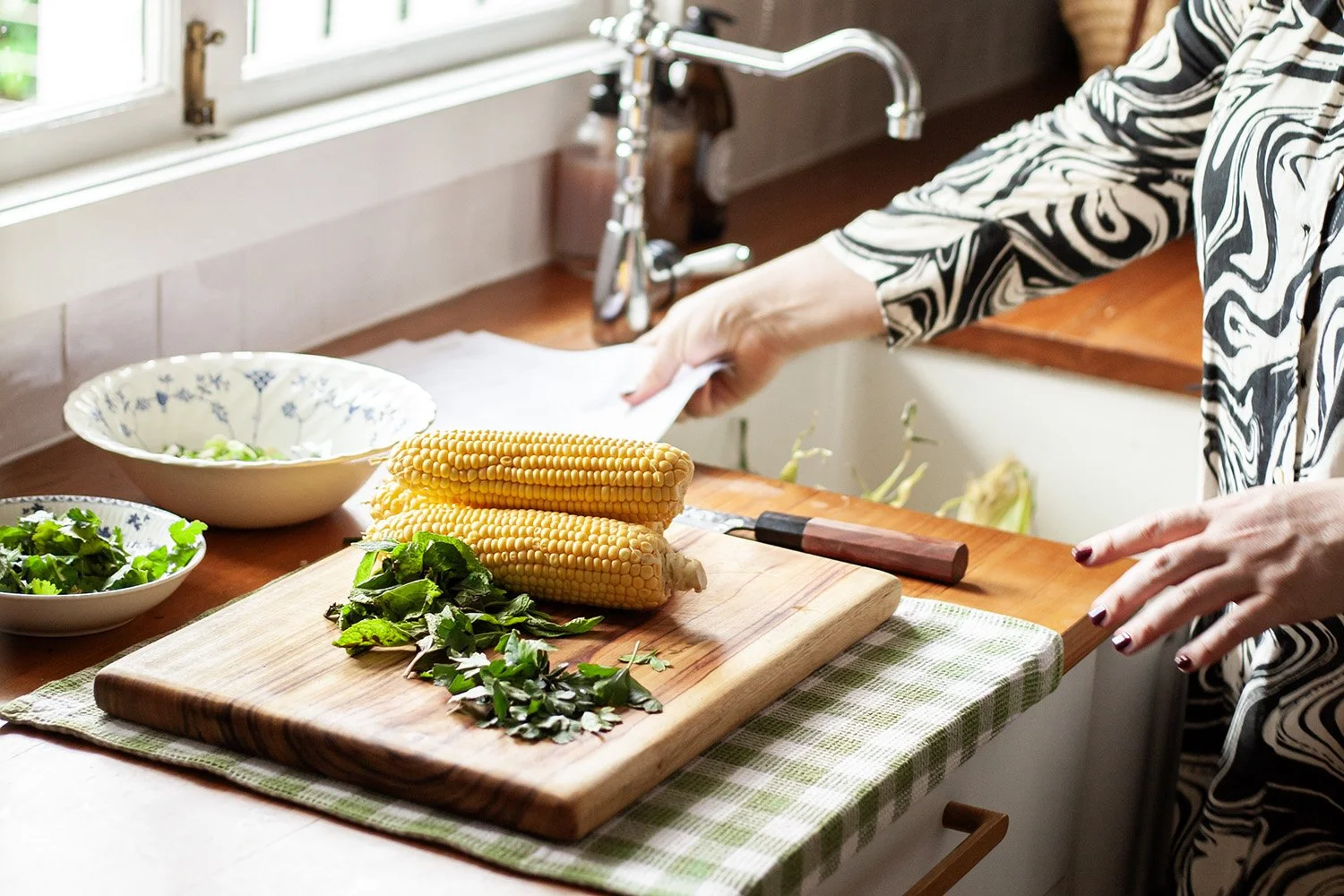
This is the most valuable time investment in the entire process. Cook anything that improves overnight — slow-cooked proteins, soups, stews, desserts that need to set, dressings, marinades. The more you complete today, the smaller the day-of workload.
Set aside your utensils and serving dishes. Use post its to mark up the serving dishes. Not having to think about this when your guests are in the house - or in the kitchen - game changer!
8. Accept That Something Will Go Wrong
It will. On every dinner party you ever host — from the first to the fiftieth — something will not go exactly to plan. A dish will take longer than expected. A sauce will not come together. A component will be slightly overcooked.
The response that protects the evening is always the same: do not announce it to guests. Most guests will never notice unless you tell them. The moment you announce that something went wrong, it becomes the story of the dinner. Stay quiet, fix what you can, simplify what you cannot, and move on.
Guests come to your home because they want to be there. A relaxed host at an imperfect dinner is a better evening than a stressed host at a technically flawless one.
9. Greet Guests at the Door — Not From the Kitchen
The first impression of the evening is the moment guests arrive. Greet them at the door, not from across the room, not from the kitchen. In person, without a tea towel in your hand.
This sounds obvious. It is the thing most beginners get wrong, because they are still finishing something in the kitchen when the doorbell rings. The 30-minute buffer — finishing all cooking 30 minutes before guests arrive — is what makes this possible. Use it.
10. The Evening Will Be Better Than You Expect
First-time hosts almost universally underestimate how forgiving guests are and how much goodwill a home-cooked meal generates. Guests who have been invited into someone's home for dinner are predisposed to enjoy themselves. They have shown up wanting the evening to be good. Your job is to not get in the way of that.
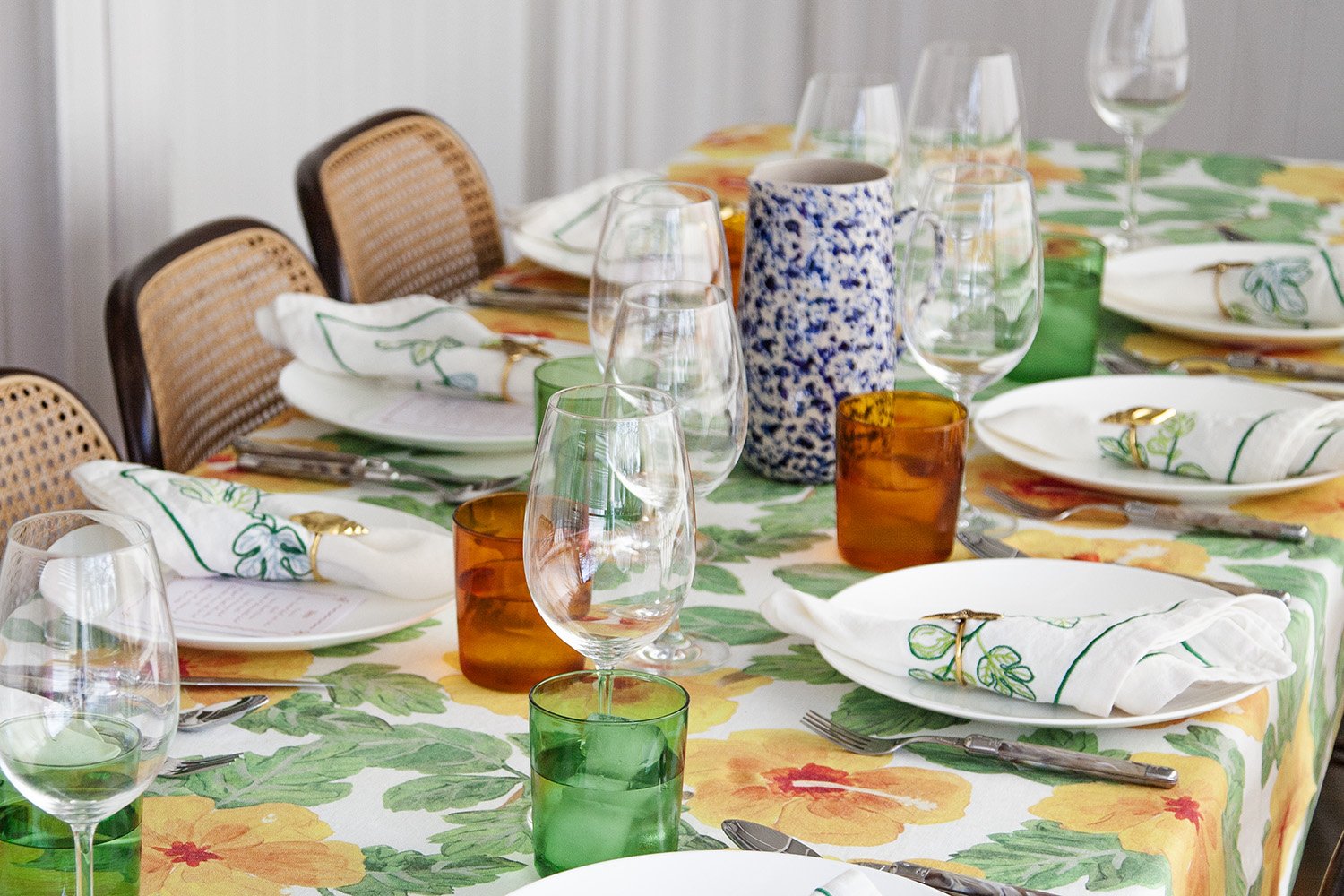
A set table, a drink on arrival, food that is warm and generous, a host who is present — that is the whole formula. The rest is details.
A Starting Menu for Your First Dinner Party
If you want a specific menu to begin with, this combination is designed for four guests, is almost entirely make-ahead, and uses techniques that are genuinely forgiving:
Starter: Whipped ricotta with roasted cherry tomatoes and sourdough — made the day before, plated in the afternoon, pulled from the fridge when guests sit down.
Main: Slow-cooked chicken thighs in tomato, olive, and white wine sauce, with creamy polenta and a simple green salad — chicken made the day before and reheated gently, polenta made two hours before, salad dressed at the table.
Dessert: Dark chocolate mousse — made two days before, served straight from the fridge.
This menu requires almost no day-of cooking, uses ingredients available in any supermarket, and produces a dinner that is genuinely impressive without being technically demanding. It is also a meal that four people will eat with genuine pleasure.
For a step-by-step process for planning a dinner party menu from scratch, see how to plan a menu from scratch.
When you are ready for the planning to be done for you — menu chosen, shopping list written, prep plan timed — The Dinner Party Guide delivers all of it in a single downloadable resource. Browse the full collection to find the one that fits your next gathering.
Pick a date. Send the invitation.